
SR244 UV Tube Flame Sensor — R244 Replacement Evaluation
Sartec Photoelectronics supplies the SR244 UV tube flame sensor for flame detection projects. Its model-specific published datasheet lists a 500 ± 50 V DC power supply voltage and a 185–260 nm spectral response range. Hamamatsu R244 is a reference for replacement evaluation; confirm the driving circuit, mechanical fit and controller requirements before accepting a substitute.
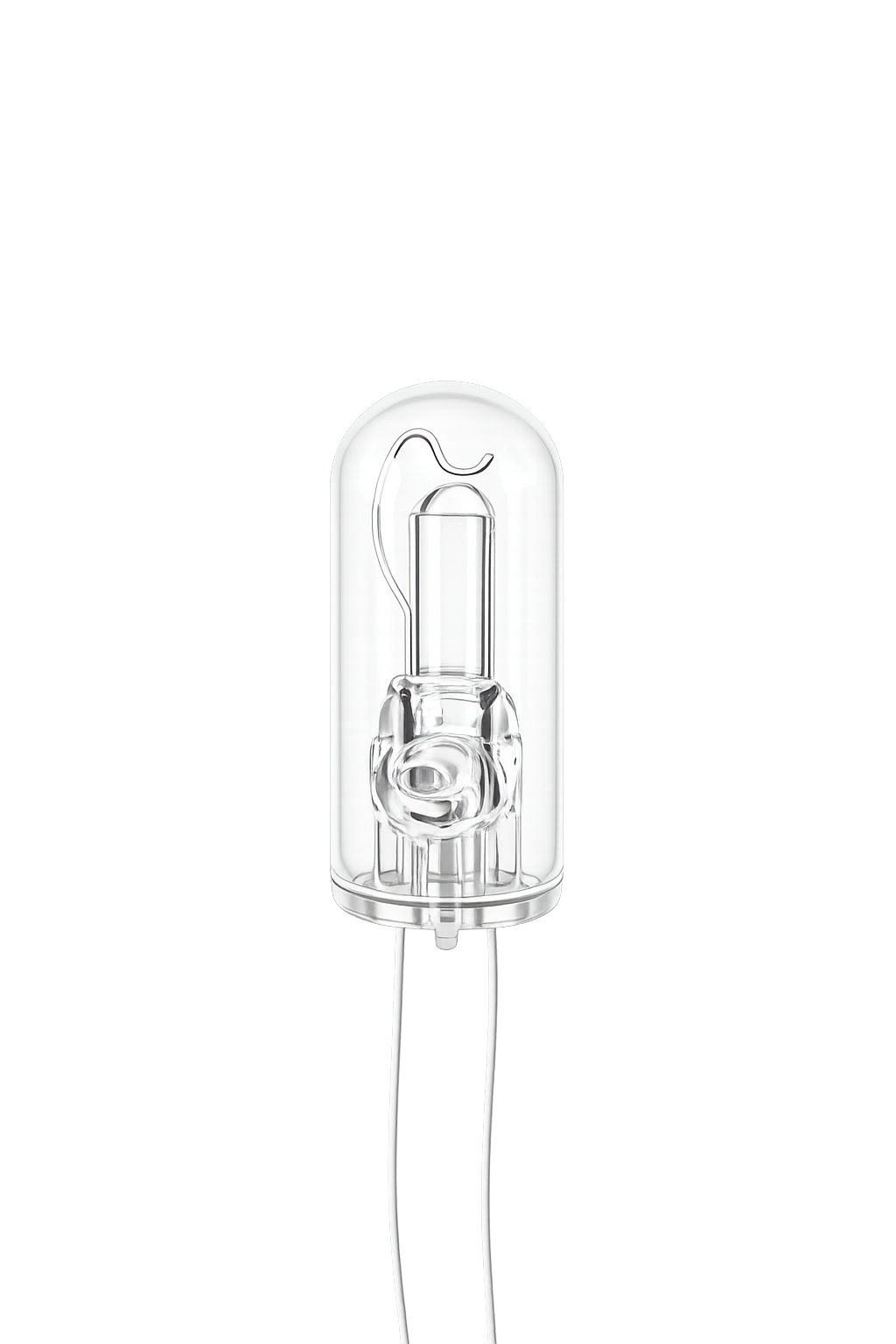
Key Features
- Direct access to the model-specific SR244 datasheet in PNG format.
- Published spectral response range: 185–260 nm.
- Published power supply voltage: 500 ± 50 V DC; this differs from the listed 575 V maximum rating.
- The datasheet includes a mechanical drawing and an example operating circuit with pulse output. Review all component values, limits and notes before integration.
Typical Applications
The published SR244 datasheet lists boiler combustion monitoring and facility fire detection. Selection for a particular burner or monitoring system requires review of the optical path, circuit, controller and operating environment.
Technical Overview
Source: the linked SR244 datasheet, headed “SR244 (Analogous to R244)”. The 575 V value is a maximum rating, not a recommended working voltage. Review the full sheet, circuit and footnotes; average discharge current is not an output-interface compatibility specification. No revision date was identified on the published sheet. Confirm the current document before design or ordering.
Published SR244 Specifications
| Parameter | Value |
|---|---|
| Model | SR244 |
| Spectral response range | 185–260 nm |
| Power supply voltage (operating parameter) | 500 ± 50 V DC |
| Average discharge current (operating parameter) | 0.3 mA |
| Minimum quenching time | 1 ms |
| Power supply voltage — maximum rating | 575 V DC |
| Driving circuit | External circuit; example circuit shown in datasheet |
| Reference model for evaluation | Hamamatsu R244 |
R244 Replacement Evaluation Checklist
Use the current R244 manufacturer datasheet and the SR244 model-specific sheet to compare electrical, mechanical, optical and controller requirements. A reference listing does not establish proven equivalence.
| Review area | Required comparison |
|---|---|
| Operating circuit | Compare operating voltage, current limits, quenching behavior and signal-conditioning requirements. |
| Mechanical fit | Compare dimensions, leads, electrode orientation and mounting against both drawings. |
| Controller and optics | Verify pulse detection, amplifier thresholds, optical path and response in the intended flame-monitoring system. |
| Qualification | Document the original part revision, any circuit or mounting adaptations and application test results before accepting a replacement. |
Performance Summary
The published SR244 datasheet provides model-specific operating values, dimensions and a circuit example. Confirm the full circuit and application conditions, then validate samples before accepting an R244 replacement.
Compatibility and Qualification
Treat R244 as a reference for a documented replacement evaluation. Electrical, mechanical, optical and controller compatibility require review and application tests before approval.
FAQs
What is the published SR244 operating voltage?
Is SR244 a verified drop-in replacement for Hamamatsu R244?
Does SR244 require an external circuit?
Is the SR244 datasheet a PDF?
Related Model and Engineering Resources
Request an R244 replacement evaluation
Request a model-specific replacement evaluation. Send the original model and revision, controller or amplifier, supply voltage, drawing or photos, application conditions and required quantity.
R244 Replacement Evaluation — Engineering Review
Concise selection notes for engineers, buyers, and maintenance teams before sampling or replacement review.
Use the SR244 datasheet and the original R244 documentation to prepare a model-specific engineering comparison. Reference listings do not establish verified interchangeability.
For R244 replacement evaluation, check the target model, detector type, mounting condition, electrical interface, response time, flame amplifier compatibility, cable routing, and ambient temperature.
Related resources include UV tube flame sensors, UV flame detectors, CHECK LIGHT UV flame sensors, and engineering support.