UV-DOAS/NDUV Modules
for Gas Analysis Integration and Air Quality Monitoring
UV-DOAS/NDUV Modules provide gas analysis in the defined measurement range in the ultraviolet range, specifically designed for environmental monitoring and air quality measurement. These modules are used for detecting pollutants, trace gases, and aerosols in both outdoor and indoor environments. Equipped with advanced optical sensors, the UV-DOAS/NDUV modules offer application-specific sensitivity and accuracy, enabling real-time data collection even in challenging environmental conditions. They are widely used in research applications, regulatory compliance, and industrial monitoring to ensure accurate air quality assessments.
Whether you’re monitoring emissions, pollutants, or conducting scientific research, our UV-DOAS/DOAS Modules deliver reliable and continuous performance, providing a crucial tool for protecting both human health and the environment.
Applications
- UV-DOAS/NDUV Modules are widely used for gas analysis in the defined measurement range, particularly in environmental monitoring and air quality measurement. These modules can provide measurement data for pollutant detection and trace gas analysis when the optical path, calibration plan, and operating environment are defined.
- Environmental Monitoring: Used for detecting pollutants and trace gases in both outdoor and indoor environments. These modules are used to monitor air quality in urban areas, industrial zones, and remote locations.
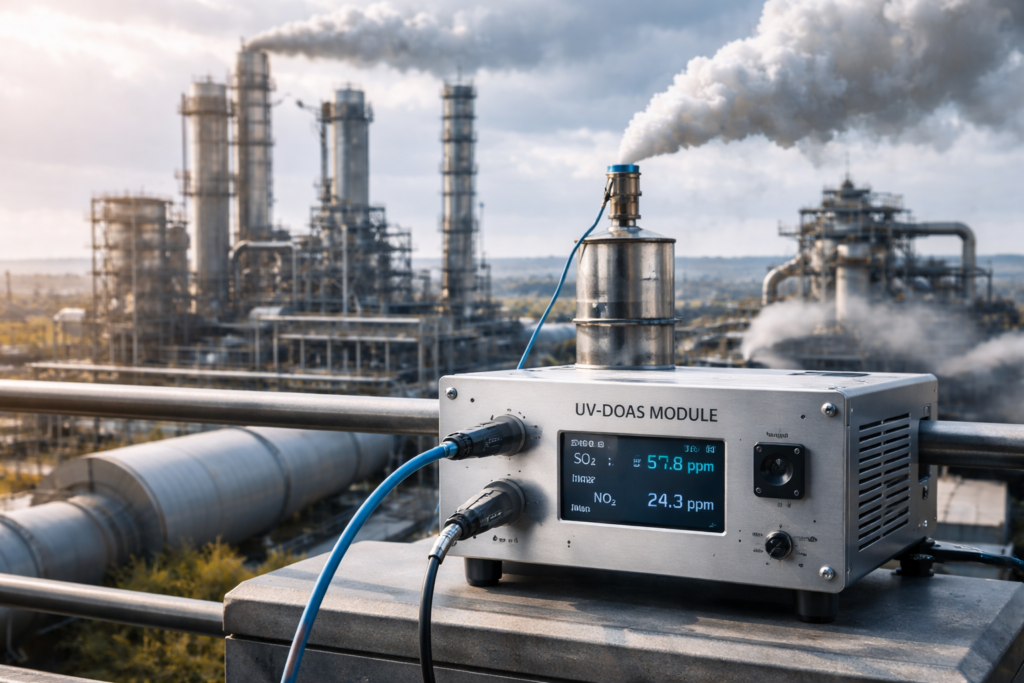
- Industrial Emissions Monitoring: Used in factories and power plants for monitoring emissions such as nitrogen oxides (NOx), sulfur dioxide (SO2), and other harmful gases. Supports documentation and test review for projects operating under environmental regulations.
- Air Quality Measurement: Used for real-time air-quality analysis when the target gas, range, response time, and sampling method are defined. Used in both industrial and residential settings to monitor pollution levels.
- Regulatory Compliance and Research: Employed in compliance with environmental standards and scientific research. These modules can support pollutant monitoring when the target gases, operating environment, and validation requirements are defined.
- Weather and Climate Studies: Used in climate research to measure trace gases and aerosols, helping researchers track changes in the atmosphere and predict long-term environmental trends.
Technical Specifications
| Detect Gas | H2S |
|---|---|
| Sampling Method | Flow |
| Sensor Type | DOAS |
| Range | 0-20 ppm |
| Measurement Error | ±2% F.S. |
| Limit of Detection | 0.1 ppm |
| Response Time (T90) | ≤20s |
| Output Signal | RS232 |
| Ventilation Flow Rate | 1~1.5 L/min |
| Housing Material | Sheet Metal |
| Tracheal Interface Size | 4/6 mm |
| Supply Voltage | 12V ±1V, Current >500mA |
| Working Current | Normal operation: ≤200mA, Impulse current: ≤300mA |
| Weight | < 2kg |
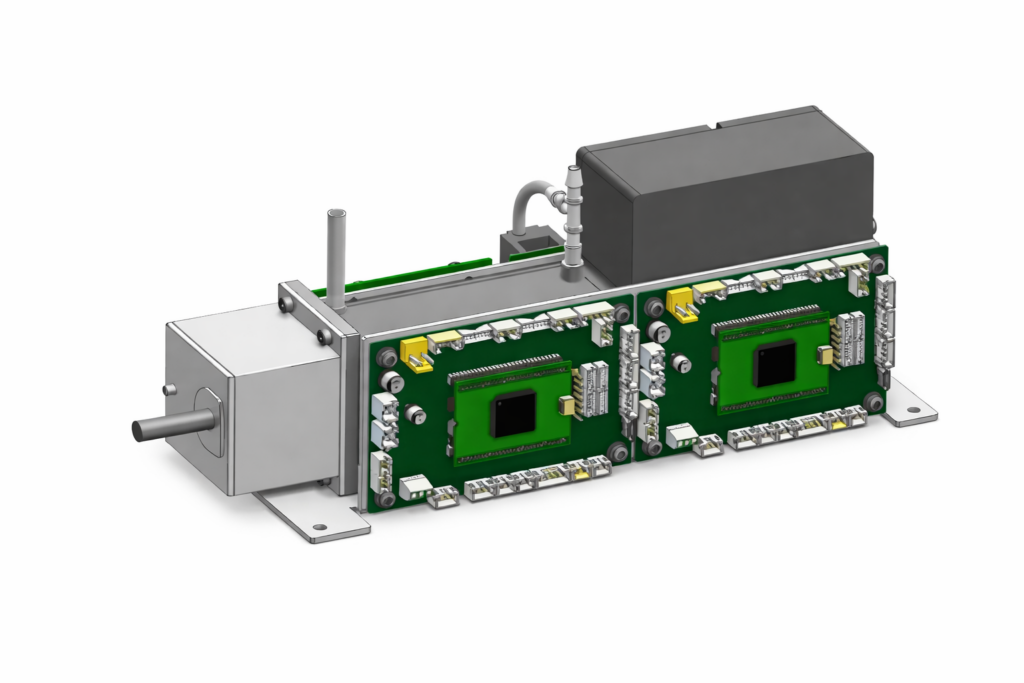
| Size | 350 mm x 110 mm x 110 mm (Based on the actual product) |
Key Features / Advantages
- Application Review: UV-DOAS/NDUV modules provide gas analysis in the defined measurement range in the ultraviolet range, used for environmental monitoring and air quality measurement. Measurement performance depends on optical path, calibration method, sampling conditions, and the operating environment.
- Real-Time Monitoring: With real-time data collection and fast response times, these modules can support continuous air quality monitoring, pollutant detection, and regulatory review when the configuration is matched to the application.
- Wide Application Range: Used for urban air quality monitoring, industrial emissions monitoring, and research applications, allowing for flexible deployment across a range of industries and environments.
- Sensitivity Review: These modules offer application-specific sensitivity for detecting low concentrations of gases and pollutants, making them suitable for applications requiring defined sensitivity and validation conditions.
- Configuration Review: Configuration and operating cost should be reviewed against the required range, maintenance plan, installation environment, and project documentation.
- Industrial Design Review: Materials, enclosure, optical path, and environmental protection should be reviewed against humidity, temperature variation, and industrial contamination conditions.
- Easy Integration: The modules can be integrated with monitoring systems when the output interface, power, and communication requirements are defined.
- Regulatory Compliance: Documentation and test requirements can be reviewed for projects operating in regulated environments.
RFQ Information for Gas Module Review
For gas module selection, provide the target gas, measurement range, optical path or sampling method, response-time requirement, output interface, installation environment, and calibration expectations. Sartec Photoelectronics can review the application requirements before recommending a suitable module configuration.
Key Advantages
Technical Support
FAQ – UV-DOAS/NDUV Modules
What gases can UV-DOAS/NDUV Modules detect?
+
What is the typical detection range of UV-DOAS/NDUV Modules?
+
How accurate are the UV-DOAS/NDUV Modules?
+
How fast is the response time of UV-DOAS/NDUV Modules?
+
Can UV-DOAS/NDUV Modules be integrated with other monitoring systems?
+
What power supply is required for UV-DOAS/NDUV Modules?
+
Are UV-DOAS/NDUV Modules suitable for outdoor use?
+
How often do UV-DOAS/NDUV Modules need calibration?
+
Get a Quote / Request Model Confirmation
To receive an accurate quote or to request model confirmation for your specific application, please provide us with the following information:
- Measurement Range: Please specify the required measurement range for your gas detection module. This helps us determine a suitable module based on your concentration needs.
- Background Gases: Indicate any background gases that might be present in your environment. This ensures that the module is calibrated to account for interference from other gases.
- Accuracy Requirements: Let us know the level of accuracy needed for your application. Different modules offer varying degrees of precision based on your measurement requirements.
- Environmental Conditions: Provide details about the environment where the module will be used (e.g., temperature range, humidity, pressure, indoor/outdoor settings). This will help us recommend a module that performs optimally under those conditions.
Once we receive these details, our engineering team will review your requirements and recommend the most suitable model, ensuring it meets your detection and operational needs.
How to Get Started:
Simply fill out the contact form below or email us directly with the information listed above. Our team will get back to you with a tailored quote or product recommendation.
Related Products
UV-DOAS and NDUV gas module engineering review notes
UV-DOAS and NDUV module selection should start from the target gas, absorption band, optical path, dust or humidity influence, and the required interface for the host instrument.
What information should be prepared before RFQ?
- Target gases such as SO2, NO2 or other UV-absorbing species
- Measurement range, optical path and expected background gas
- Sampling method, window contamination and maintenance plan
- Analog, digital or serial output required by the host system
Can the module be selected by gas name alone?
No. The same gas can require different optical path, range, response time, sampling and output-interface choices. Sartec Photoelectronics reviews the measurement conditions before suggesting a suitable configuration.
What does the integration review focus on?
The review focuses on measurement method, operating environment, calibration plan, output interface, mechanical constraints and project documentation requirements.