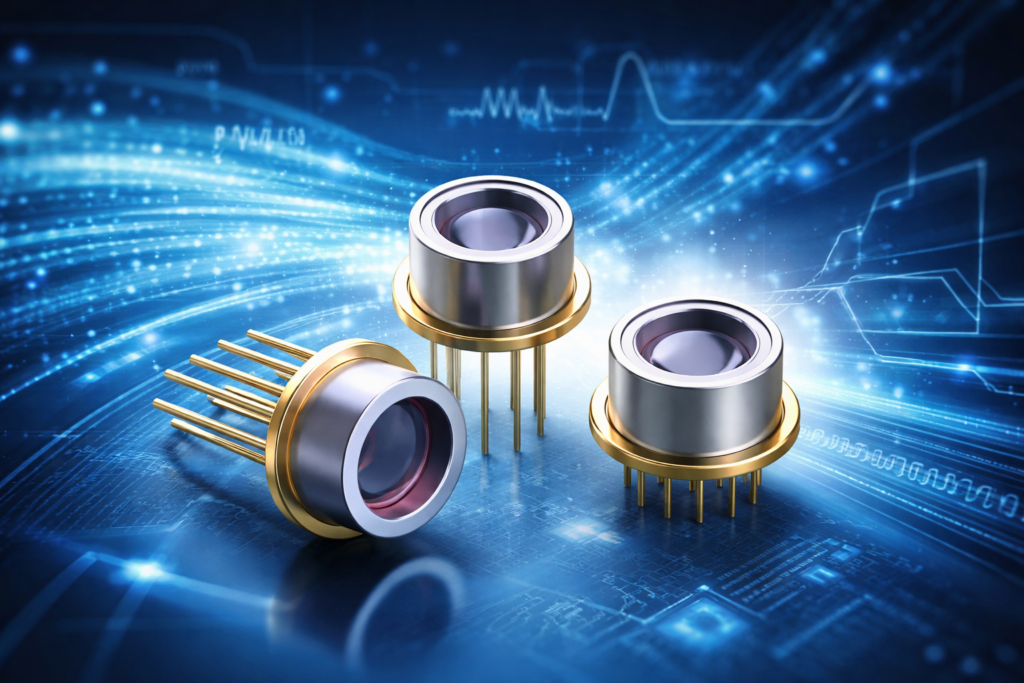
InGaAs Photodiodes (IR Detectors)
Near-Infrared Detection and Replacement Selection
InGaAs photodiodes provide near-infrared detection for spectroscopy, gas analysis, optical instruments and industrial monitoring. Standard devices typically cover 900-1700 nm; extended-range options require model-specific verification. Compare spectral response, active area, responsivity, dark current, capacitance, package dimensions and pin configuration before selection.
Contact Sartec Photoelectronics for a parameter and package compatibility review.
Function
InGaAs photodiodes support near-infrared light detection within the 900–1700 nm wavelength range. Selection should review responsivity, dark current, capacitance, active area, package, and circuit conditions for the target instrument. Response time, efficiency, and low-light behavior should be checked under the target circuit and measurement conditions.
• High sensitivity in the NIR region (900–1700 nm)
• Low noise and fast response time
• Designed for defined NIR sensing environments
• Used in fiber-optic systems, spectroscopy, environmental sensing, and OEM instrument review
Features
• Compact and Robust Design: Suitable for integration in various industrial and scientific systems.
• Low Dark Current: Ensures accurate readings even in low light conditions.
• Fast Response Time: Used where response time should be reviewed against the target circuit and signal conditions.
• Application Review: Selection should consider responsivity, dark current, active area, package, and circuit conditions for commercial and industrial applications.
• Customizable: Available in various sizes and configurations to suit specific application requirements.
Product Models
Explore our selection of InGaAs photodiodes, designed to meet a variety of near-infrared light detection needs. Each model is optimized for different applications, from scientific research to industrial monitoring.
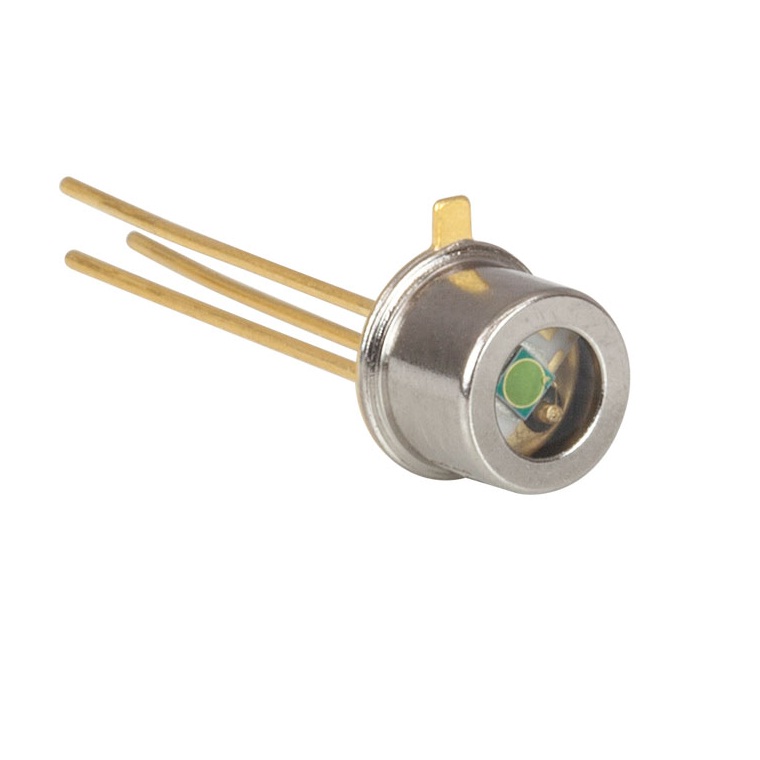
SR-B10-8026-T46W
For G12183-010K replacement evaluations. Verify active area, package, pinout, dark current and circuit conditions.
View SR-B10-8026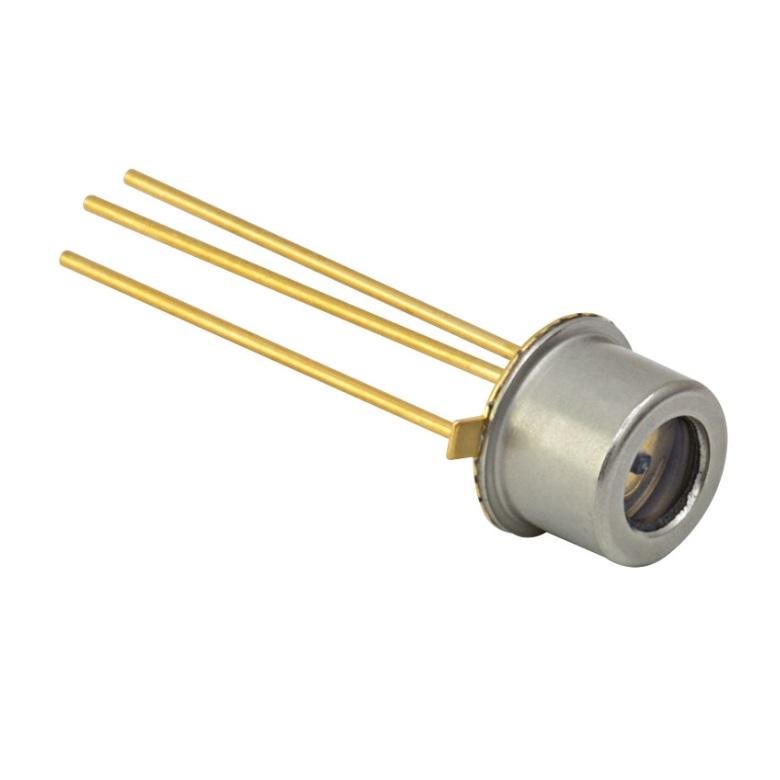
SR-B5-8017-T46W
For G12181-005K replacement evaluations and NIR sensing projects. Compatibility review is recommended.
View SR-B5-8017
Typical Applications
InGaAs photodiodes are used in a wide range of applications requiring high-performance near-infrared detection:
• Optical Communications: Used in high-speed fiber-optic systems for data transmission.
• Spectroscopy: Used in scientific instruments, material testing, and chemical analysis when the wavelength range and signal level match the detector.
• Environmental Monitoring: Detects pollutants and monitors air quality in the NIR range.
• Biomedical and Medical Imaging: Used in imaging systems and diagnostic equipment.
• Lidar and Remote Sensing: Key component for 3D imaging and environmental sensing.
Selection Guide
Choosing the right InGaAs photodiode for your application depends on several factors. Our selection guide helps you understand which model matches your wavelength, package, and circuit requirements.
• Wavelength Range: Select based on the required detection wavelength (900–1700 nm).
• Package Type: Tube, compact, or custom form factor.
• Response Time: Choose based on the speed requirement of your application.
• Environment: Consider environmental factors like temperature, vibration, and ambient light interference.
OEM Configuration and Replacement Support
If you have specific performance requirements, we offer custom InGaAs photodiodes designed to meet your exact specifications. Whether you need a unique form factor, extended wavelength range, or specialized packaging, our engineering team will work with you to deliver the suitable solution.