Reliable Industrial Flame Detection Applications
Sartec Photoelectronics offers high-precision sensing for diverse industrial flame detection applications. From our global R&D headquarters to local engineering support, we provide reliable flame detection components designed for 24/7 operational continuity in hazardous environments.
Industrial Flame Detection Applications for Boilers
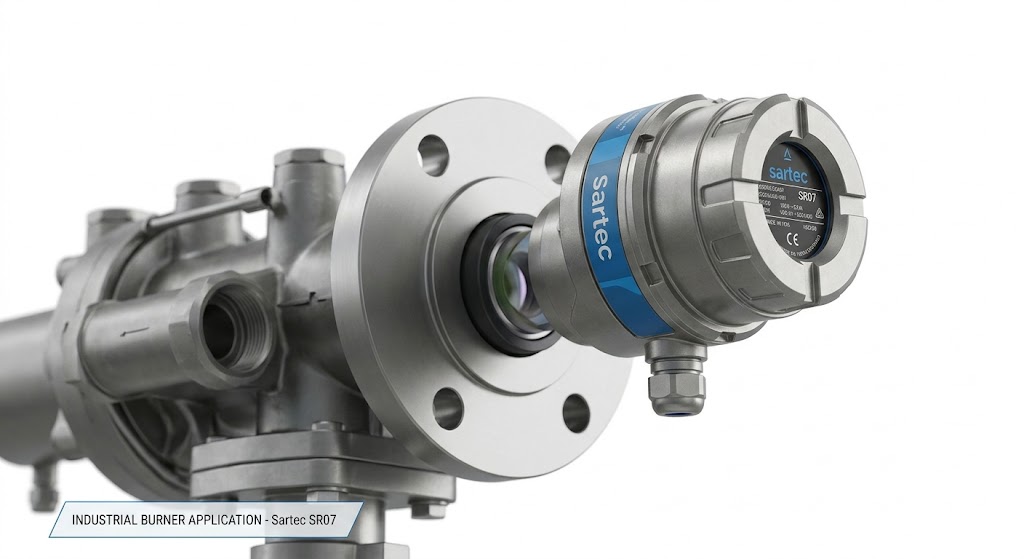
In power plants and heavy industries, boilers require continuous, fast-response flame supervision. The SR07 UV tube is one option for replacement evaluation. Compare it with the broader UV tube flame sensor range, then validate electrical, mechanical, response, and controller requirements in the target system.
- Spectral Precision tuning (185-260nm)
- Solar-blind threshold to prevent false alarms
- Extended MTBF for critical thermal infrastructure
Detection in Furnaces & Kilns
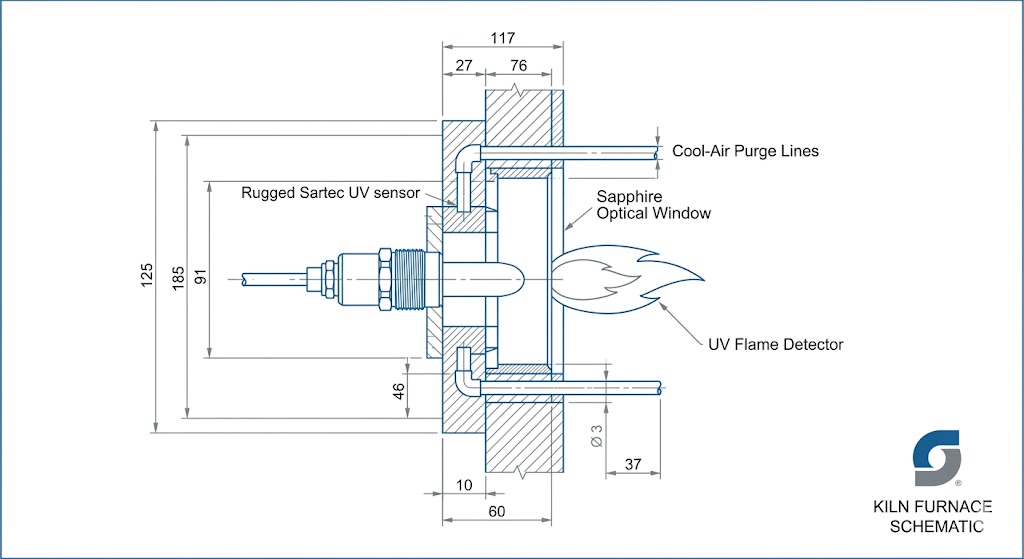
High-temperature furnaces create extreme stress on sensors. Detector selection should consider the flame spectrum, hot refractory background, sighting position, cooling or purge arrangement, response requirements, and controller interface. Compare integrated UV flame detectors and UV tube options before system validation.
- High-temperature quartz optical window design
- Advanced background noise rejection for kiln glow
- Metallurgical-grade resilience for 125°C+ environments
Waste-to-Energy Incinerators
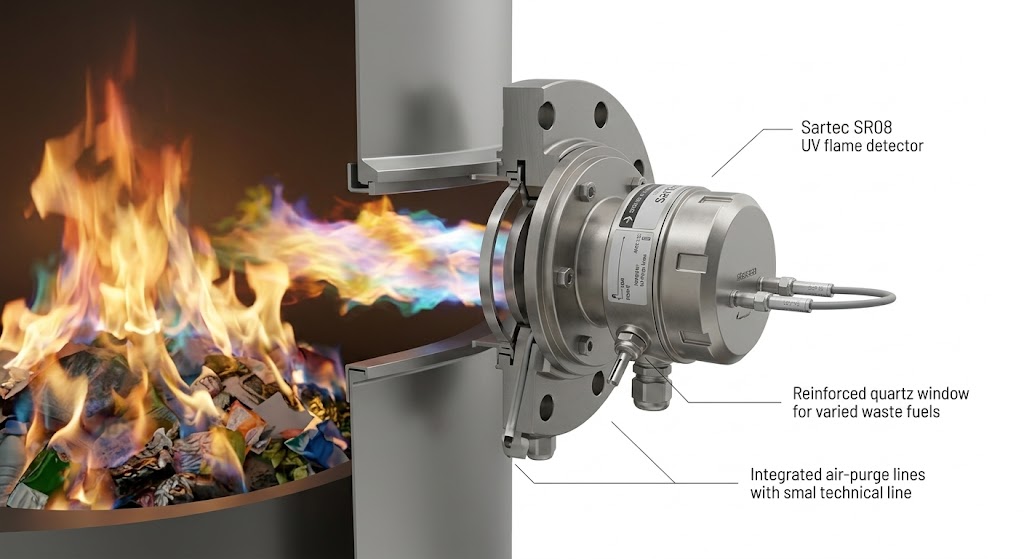
Incinerators involve non-homogeneous fuels with fluctuating flame geometry. Selection should account for viewing coverage, signal fluctuation, response requirements, contamination, purge air, maintenance access, and the burner management safety sequence. Review flame detection sensor categories before choosing a detector architecture.
- Wide dynamic range for fluctuating fuels
- Optical filtering for smoke and vapor penetration
- Rapid-response safety logic integration
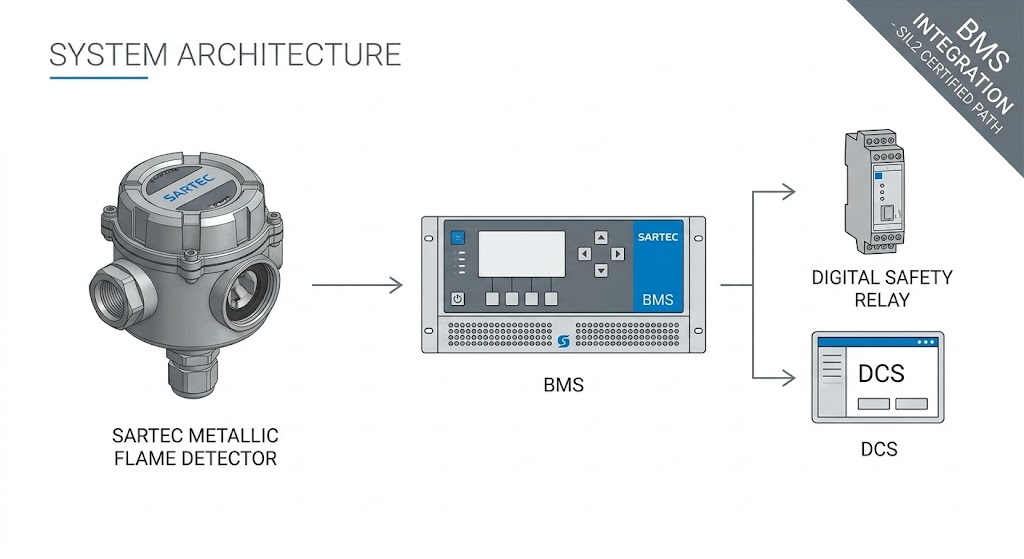
BMS and Control System Integration
Practically integrating S5 AB3 detectors into fail-safe architectures ensures the strict safety requirements (safety-related/safety-related). We provide standardized outputs that are compatible with global PLC and Burner Management Systems.
- SIL-capable sensing architectures
- Millisecond-level flame-out detection
- Standardized output for global PLC controllers
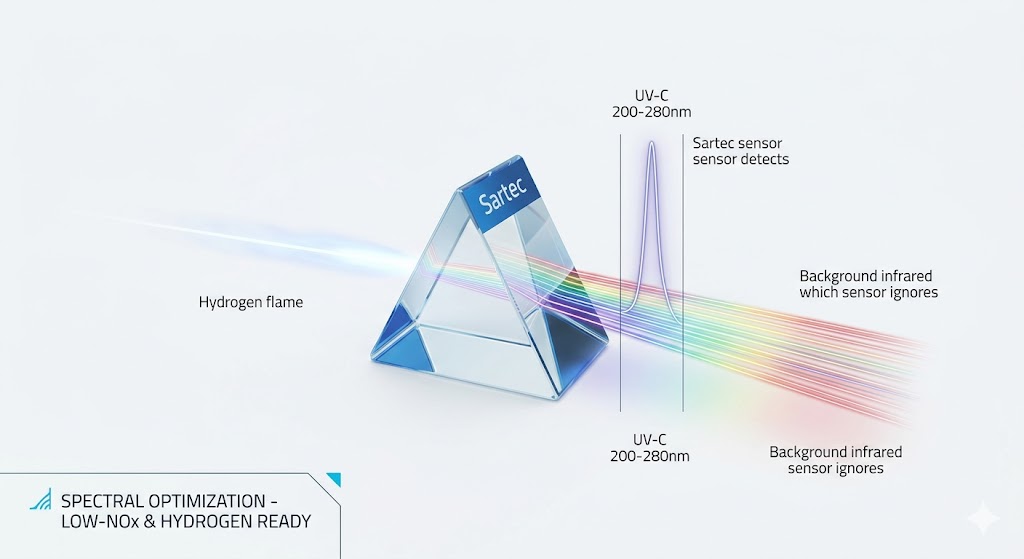
Hydrogen and Low-NOx Blue Flames
Lean-burn and hydrogen-enriched fuels produce faint blue flames that traditional sensors often miss. Review the Low-NOx and blue flame detection guide and the KLC1000 UV flame detector as application-specific starting points, followed by system validation.
- Short-wave UV spectral optimization
- Tuned for hydrogen-enriched fuel blends
- Ultra-high sensitivity for invisible blue flames
industrial flame detection applications Engineering Notes
The industrial flame detection applications page helps engineering teams connect real combustion conditions with the correct UV flame detection approach. Application context is important because burner geometry, fuel type, flame shape, and viewing position directly affect detector performance.
When planning industrial flame detection applications, review fuel source, burner layout, flame intensity, startup sequence, response time, flame amplifier compatibility, cable routing, enclosure location, and maintenance access before final product selection.
Relevant internal resources include UV flame detectors, UV tube flame sensors, burner management system flame detection, the KLC1000 for Low-NOx review, and application engineering support.
industrial flame detection applications FAQ
What affects industrial flame detection applications performance most?
Fuel type, flame geometry, detector position, response time, amplifier compatibility, and ambient conditions have the strongest impact.
Can one UV sensor fit every combustion system?
No. The detector should be selected according to flame characteristics, installation location, and system safety requirements.
Can Sartec help review an application?
Yes. Sartec Photoelectronics can review burner type, current model, installation photos, and replacement targets for practical guidance.