CRDS Trace Gas Analysis Modules
When precision is critical, standard sensors fall short. Sartec Photoelectronics engineers high-performance crds gas modules utilizing advanced Cavity Ring-Down Spectroscopy. Designed for straightforward OEM integration, these modules can support ppb-level or lower detection targets depending on the gas species, optical cavity design, sampling method, and calibration conditions.
- Ultra-trace gas detection at ppb and ppt concentration levels
- Immune to laser intensity fluctuations ensuring absolute stability
- Compact OEM architecture for rapid instrument integration
- High selectivity when the target gas, wavelength, cavity design, and calibration method are properly matched
Technical Specifications
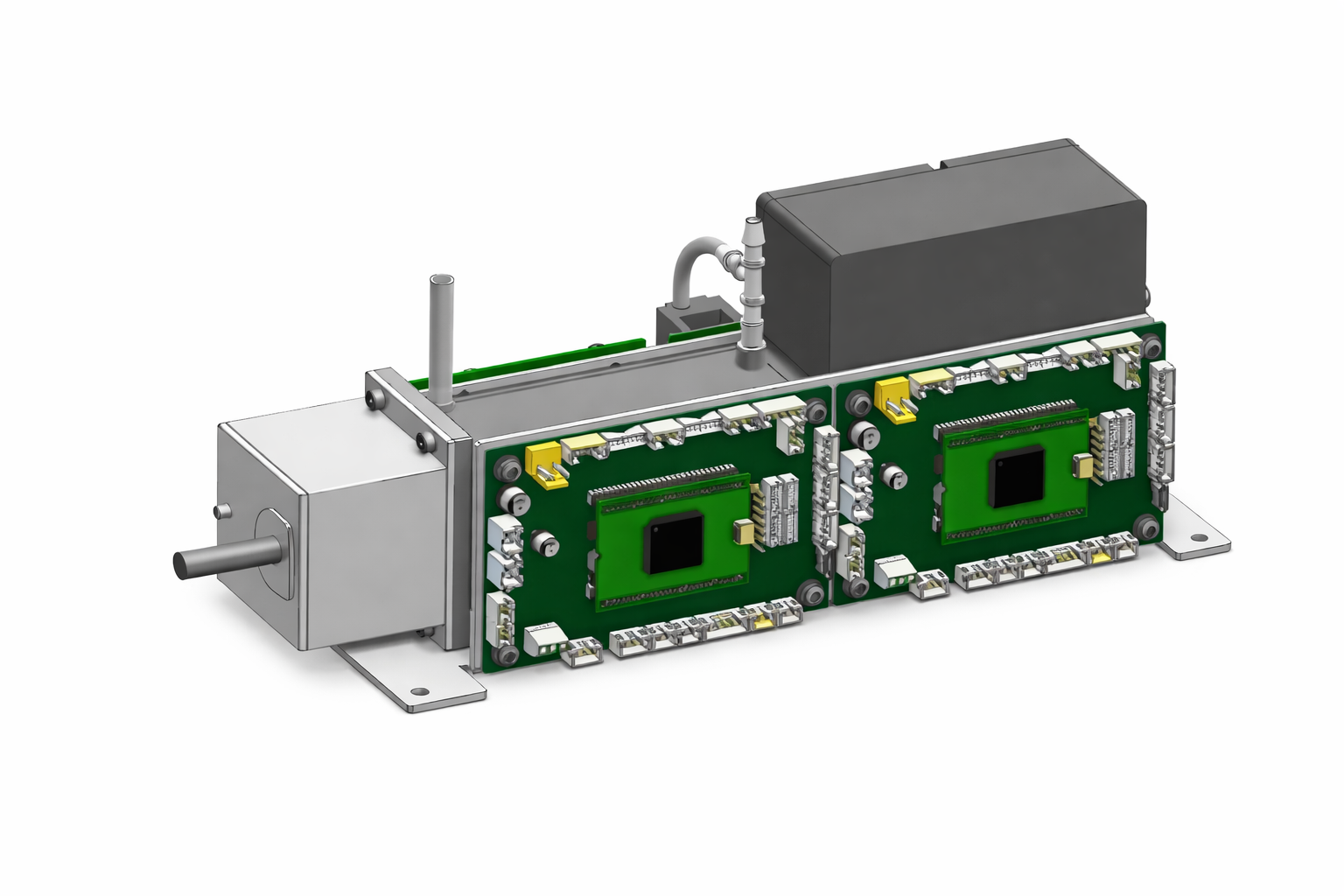
Our crds gas modules are engineered to meet the stringent requirements of industrial automation, environmental monitoring, and semiconductor fabrication.
| Parameter | Specification Details |
|---|---|
| Detection Technology | Cavity Ring-Down Spectroscopy (CRDS) |
| Detection Limit (LOD) | < 1 ppb (Application and target gas dependent) |
| Effective Optical Path Length | Up to 5 km (Folded within a compact high-finesse cavity) |
| Measurement Range | 0 - 100 ppm / 0 - 5000 ppb (Customizable) |
| Response Time (T90) | < 5 seconds |
| Data Interface | RS232 / RS485 / Modbus TCP for OEM integration |
| Operating Temperature | 10°C to 45°C (Featuring active internal thermal stabilization) |
The Physics Behind Cavity Ring-Down Spectroscopy
To truly understand the value of trace gas analysis, one must look at the underlying physics. In standard direct-absorption spectroscopy, a laser beam passes through a gas sample once, and the drop in light intensity is measured. At parts-per-billion (ppb) levels, this intensity drop is so microscopic that it is often lost in background electronic noise. This is where CRDS modules can support applications where a longer effective optical path and careful noise control are required.
Inside the module, a laser pulse is injected into a highly reflective optical cavity (typically consisting of mirrors with >99.99% reflectivity). The light pulse bounces back and forth thousands of times, creating an optical path length of several kilometers within a space of just a few centimeters. Each time the light reflects, a tiny fraction escapes and is captured by a highly sensitive photodetector. When the laser is abruptly turned off, the light intensity inside the cavity decays exponentially. This decay time is known as the "ring-down time."
The genius of this technique is that the ring-down time is strictly dependent on the absorption of the gas sample, and completely independent of the initial laser intensity. If a specific target gas is present, it absorbs the light, causing the ring-down time to decrease faster. By precisely measuring this time difference, Sartec's crds gas modules calculate gas concentrations down to ppt levels, providing absolute measurement stability for your analytical instruments.
Frequently Asked Questions
Review CRDS Trace Gas Detection
Contact our optical engineering team to discuss OEM integration, detection limits, and module specifications tailored to your project.
CRDS gas modules Engineering Review
Concise selection notes for engineers, buyers, and maintenance teams before sampling or replacement review.
The CRDS gas modules page supports engineers comparing gas analysis modules for industrial monitoring, environmental measurement, and OEM instrument integration.
For CRDS gas modules, selection should consider target gas, detection range, response time, optical path design, calibration method, humidity influence, interface requirements, and long-term stability expectations.
Related resources include gas detection modules, TDLAS modules, NDIR modules, and UV-DOAS modules.
When should engineers consider CRDS gas modules?
Consider CRDS gas modules when the application requires application-specific sensitivity, stable optical measurement, and module-level integration support.
What information is needed for gas module selection?
Provide target gas, detection range, environment, interface requirements, calibration expectations, and installation constraints.
Can Sartec support OEM gas analysis projects?
Yes. Sartec Photoelectronics can review module options and technical requirements for OEM gas detection systems.
CRDS trace gas analysis module engineering review notes
CRDS module review should clarify the target gas, detection limit, cavity design, sample handling, calibration method, and whether the project needs laboratory, OEM, or industrial integration.
What information should be prepared before RFQ?
- Target trace gas and required detection limit
- Cavity, mirror and optical path requirements
- Sample conditioning, humidity and contamination control
- Calibration method, data output and integration format
Can the module be selected by gas name alone?
No. The same gas can require different optical path, range, response time, sampling and output-interface choices. Sartec Photoelectronics reviews the measurement conditions before suggesting a suitable configuration.
What does the integration review focus on?
The review focuses on measurement method, operating environment, calibration plan, output interface, mechanical constraints and project documentation requirements.