NDIR Modules
NDIR Gas Detection Integration for HVAC and Industrial Applications
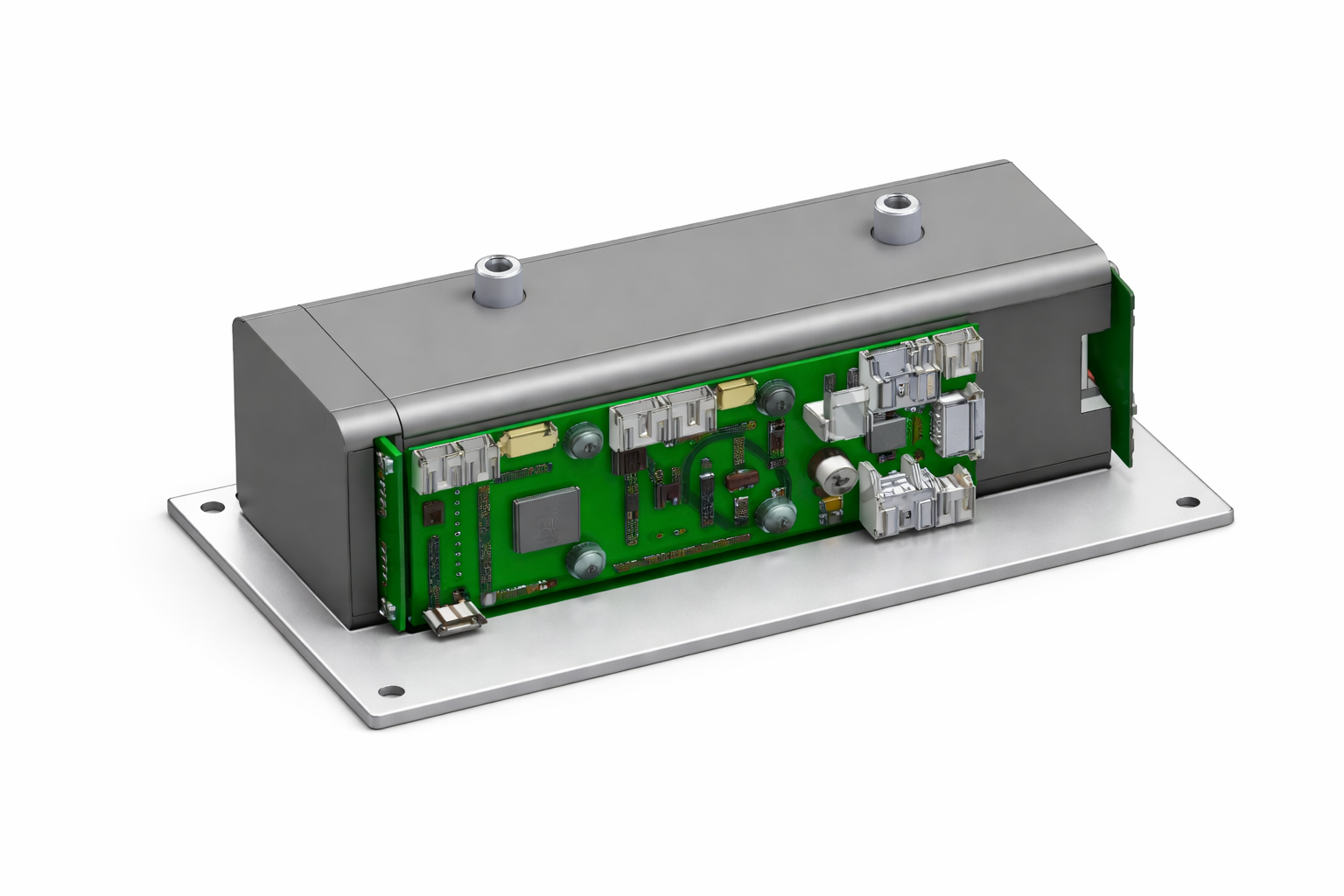
NDIR (Non-Dispersive Infrared) modules provide a reliable, practical solution for detecting gases in a variety of applications, including **HVAC systems**, industrial monitoring, and indoor air quality assessment. These modules are widely used for detecting gases such as **CO2**, **CH4**, **CO**, and **H2O**.
Applications
NDIR Modules are used for a wide range of applications, including:
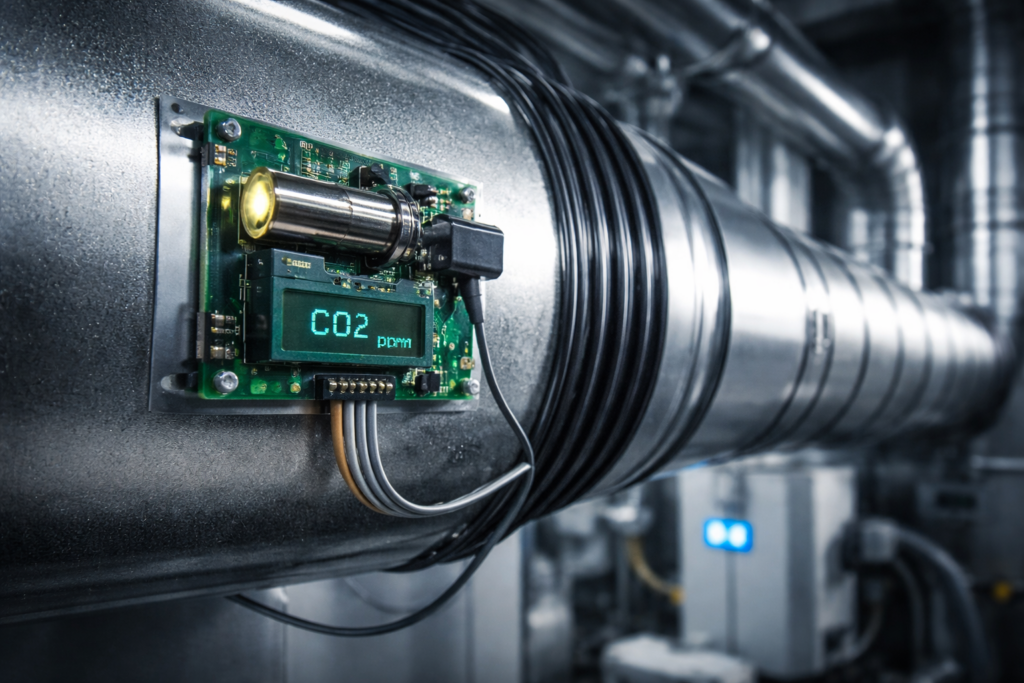
- HVAC Systems: Used to monitor and regulate indoor air quality, specifically **CO2** levels.
- Industrial Applications: Monitor gas emissions and environmental conditions in factories, plants, and warehouses.
- Indoor Air Quality: Used in residential and commercial spaces to ensure clean and healthy air.
- Energy Efficiency: Helps optimize energy use by controlling ventilation based on gas concentration levels.
Technical Specifications
| Gas | CO |
|---|---|
| Sampling Method | Flowable |
| Sensor Type | NDIR |
| Range | 0-100 ppm |
| Measurement Error | ±2% F.S. (Lower error, customizable production) |
| Limit of Detection | 2% F.S. |
| Response Time (T90) | ≤10s |
| Output Signal | RS232 |
| Ventilation Flow Rate | 0.2~1.5 L/min |
| Housing Material | Sheet Metal |
| Interface Size | 4/6 mm (PTFE) |
| Supply Voltage | 12V ±1V, Current >500mA |
| Working Current | Normal operation: ≤200mA, Impulse current: ≤300mA |
| Machine Weight | < 2kg |
| Size | 105mm x 50mm x 50mm (size depends on the measuring range) |
Key Features / Advantages
- Practical Configuration: NDIR modules provide a practical solution for gas detection, making them used for a wide range of applications, from HVAC systems to industrial monitoring. These modules offer reliable performance when the sensing method and application requirements are suitable.
- High Sensitivity and Accuracy: With a detection range from 0-5000 ppm, NDIR modules offer application-specific sensitivity and accuracy, capable of detecting even the smallest concentrations of gases such as CO2, CH4, CO, and H2O.
- Real-Time Monitoring: These modules are designed for real-time gas detection with quick response times, making them used for continuous monitoring in industrial environments and HVAC systems.
- Easy Integration: NDIR modules are designed for easy integration with existing systems. They offer analog output and RS232 connectivity, ensuring straightforward communication with controllers, data loggers, and other monitoring devices.
- Durable and Long-Lasting: Built with robust housing and high-quality components, NDIR modules are designed to withstand harsh conditions, offering long-lasting durability and minimal maintenance requirements.
- Wide Application Range: These modules are suitable for a variety of applications, including HVAC systems, indoor air quality monitoring, industrial emissions monitoring, and environmental monitoring, offering great flexibility across different sectors.
- Low Power Consumption: The NDIR modules are energy-efficient, with a low power consumption of 5V DC, making them used for both stationary and mobile applications.
- Compliance with Environmental Standards: These modules help companies ensure compliance with environmental regulations, by providing accurate and continuous monitoring of harmful gases, making them a key tool for environmental protection.
RFQ Information for Gas Module Review
For gas module selection, provide the target gas, measurement range, optical path or sampling method, response-time requirement, output interface, installation environment, and calibration expectations. Sartec Photoelectronics can review the application requirements before recommending a suitable module configuration.
Key Advantages
- Practical Configuration: NDIR Modules provide an affordable solution for gas detection, offering high reliability and accuracy when the sensing method and application requirements are suitable. They help engineering teams match the sensing method to project requirements.
- Low Maintenance Requirements: The NDIR technology requires minimal maintenance, reducing the overall operational costs and downtime. This can support long-term monitoring when maintenance intervals, calibration plan, and operating environment are defined.
- Easy to Integrate: These modules are designed for easy integration into existing systems, offering RS232 output and analog signal compatibility. This ensures straightforward communication with control systems and data logging equipment.
- Durable and Long-Lasting: Built to withstand harsh environments, NDIR Modules are highly durable, ensuring long-term stability and reliable performance in even the most demanding industrial settings.
- Real-Time Monitoring: NDIR Modules can support real-time gas detection for gases such as CO2, CH4, and CO when the range, response time, and calibration plan match the application.
- Wide Range of Applications: These modules are used across diverse industries such as HVAC, indoor air quality monitoring, industrial gas detection, and environmental monitoring, offering versatility in various use cases.
- Energy Efficient: NDIR Modules consume low power, typically operating with 5V DC power, which makes them suitable for both mobile and stationary applications, ensuring energy efficiency and cost savings.
- Compliance with Environmental Standards: The modules assist companies in achieving compliance with environmental regulations by providing accurate, continuous monitoring of gases and pollutants, helping businesses maintain environmentally responsible operations.
Technical Support
FAQ – NDIR Modules
What gases can NDIR Modules detect?
+
What is the typical measurement range of NDIR Modules?
+
How fast is the response time of NDIR Modules?
+
Can NDIR Modules be integrated into existing systems?
+
What is the power requirement for NDIR Modules?
+
Related Products
NDIR gas detection module engineering review notes
NDIR module selection should be based on target gas, optical filter, path length, measurement range, temperature influence, and the electrical interface needed by the final instrument.
What information should be prepared before RFQ?
- Target gases such as CO2, CO, CH4 or hydrocarbons
- Required ppm or percent range and response time
- Temperature, humidity and cross-gas influence
- Power supply, output signal and calibration plan
Can the module be selected by gas name alone?
No. The same gas can require different optical path, range, response time, sampling and output-interface choices. Sartec Photoelectronics reviews the measurement conditions before suggesting a suitable configuration.
What does the integration review focus on?
The review focuses on measurement method, operating environment, calibration plan, output interface, mechanical constraints and project documentation requirements.